
Manufactured stone with stucco: where it belongs on a house
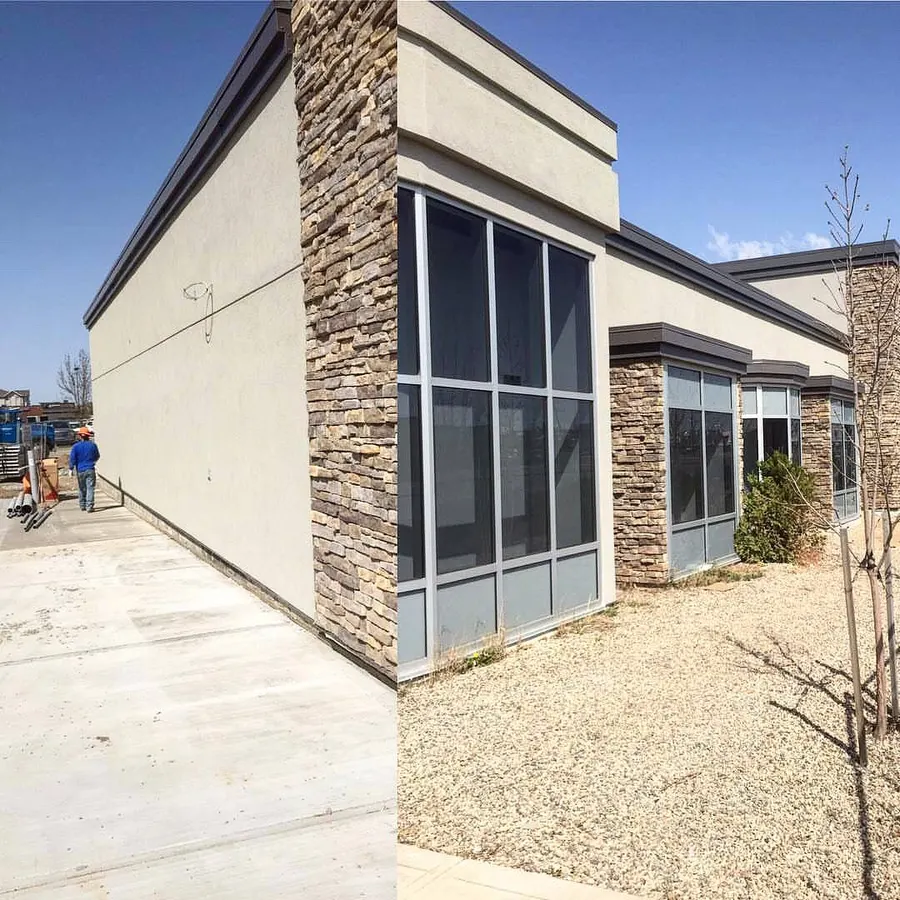
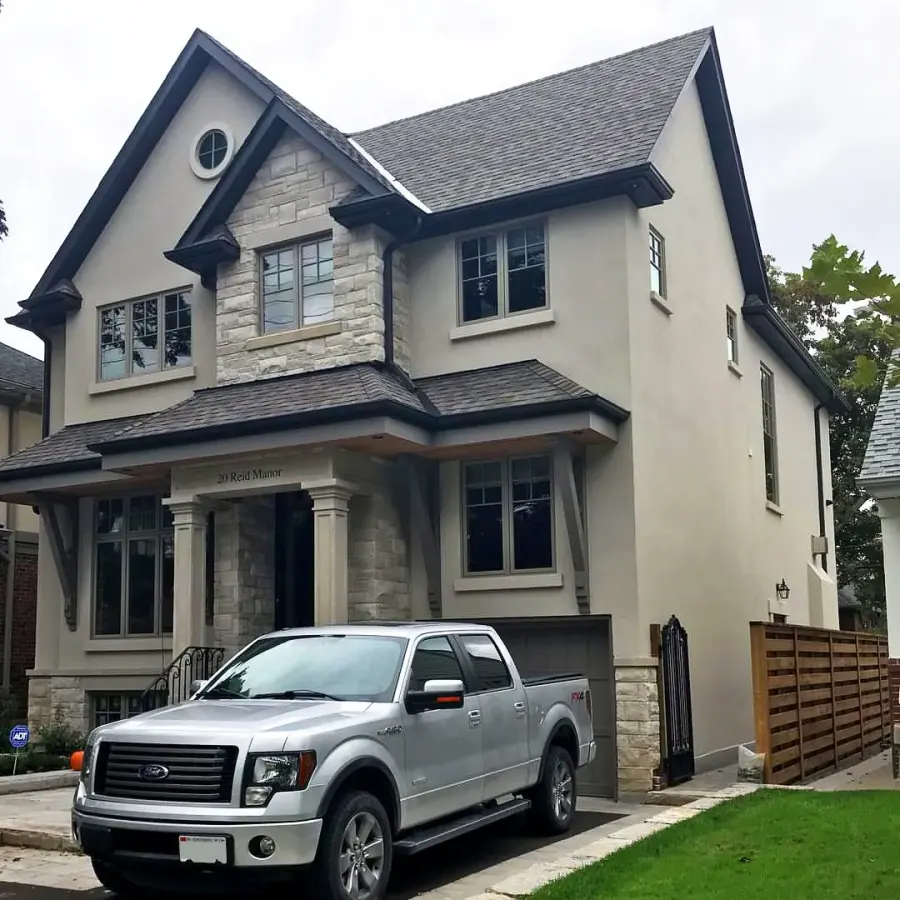
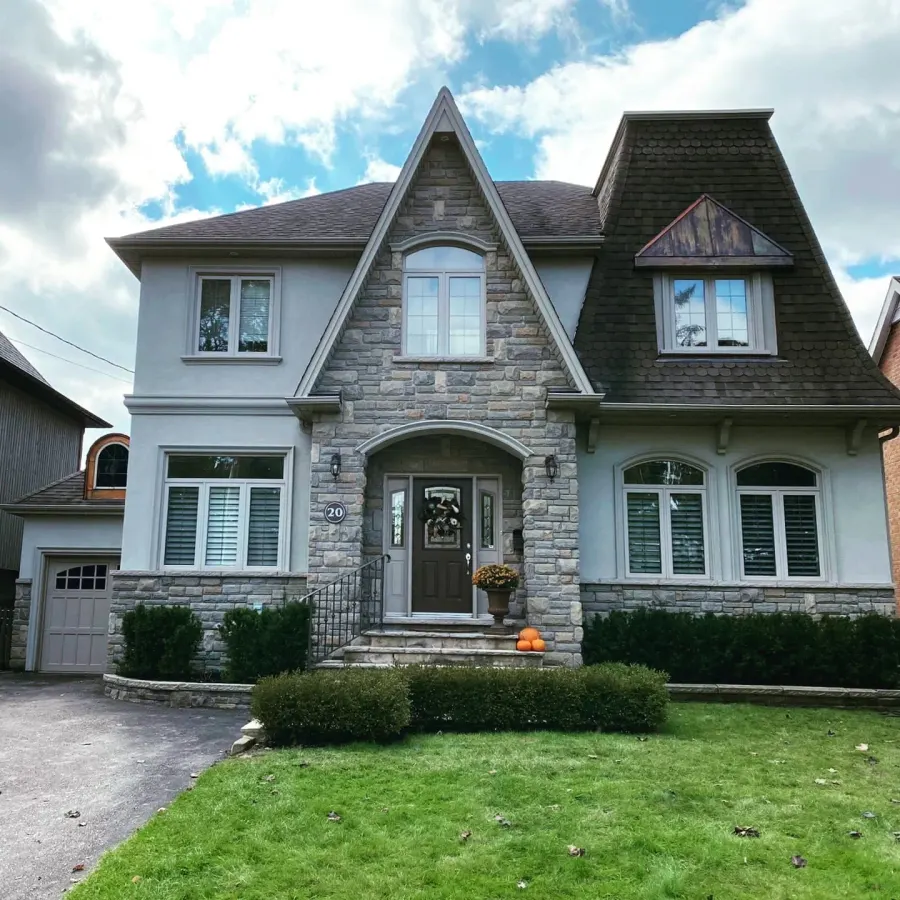
Most of the houses in our gallery are stucco and stone together. Stone gives weight and texture where the eye lands; stucco gives the clean field around it. Used well the two make a house. Used everywhere, stone makes a wall look busy and costs more than it should.
What manufactured stone is
Concrete cast in moulds taken from real stone, coloured through with pigments, and made thin and light enough to go onto a framed wall without footings. From a few feet away it reads as stone. It is cheaper than natural stone, faster to lay, and available in ledgestone, fieldstone, limestone, cobble and dozens of other profiles and colours. It is extremely durable, cost-effective and quick to install, which is why it has become the default stone on houses in the GTA.
Where stone belongs
The base course
Stone on the bottom two to four feet of the wall, with stucco above. This is the most useful place for it. It takes the splash from walkways and the snow piled against the house, it hides the line where the stucco stops above grade, and it visually grounds the house. If you are going to put stone in one place, this is it.
The entry
A stone surround at the front door, stone on porch columns, or a stone panel on the wall the door sits in. The entry is where visitors look first and where weight and texture are welcome.
Chimneys
A chimney in stone with the house in stucco is a classic combination, and stone handles the weather a chimney gets well, provided the cap and flashings are right.
A feature wall
One elevation or one bay in stone, usually the one facing the street, with the rest in stucco. On a modern house this is often a tall panel beside the entry or the garage.
Garden and retaining walls
Stone on low walls near the house ties the landscape to the exterior, and it does not mind being close to the ground the way stucco does.
Where it does not belong
- Everywhere. A house entirely in manufactured stone reads heavy and the repeating moulds become visible. Stone works as a contrast to a plain field.
- Random patches. Stone that starts and stops mid-wall for no reason looks applied. It should start and stop at corners, at a change in plane, or at a horizontal line such as a sill or band.
- Where water sits behind it. Stone is masonry and needs a drainage layer and flashings like any cladding. Stone laid on bare sheathing or without a weep at the bottom fails.
- Below grade without a detail. The base course can come close to the ground, but it needs a proper footing detail or a gap and flashing, not soil piled against it.
How much is enough
A base course plus an entry accent is the combination on most of the houses we finish, and it is rarely wrong. Adding a chimney or one feature wall is the next step. Beyond that, each addition should have a reason you can say out loud. The most expensive houses in our gallery use stone sparingly.
The junction that matters
Where stone meets stucco is a line water can get behind if it is not detailed. At the top of a base course, a sloped cap or sill stone with a drip edge sends water out over the stone face, and the stucco above is sealed to the cap. At a vertical junction, the two systems are flashed and sealed so neither traps water against the other. Behind the stone, two layers of weather barrier or a drainage mat let water that gets through the stone run out at the bottom through a weep screed.
This is the strongest argument for one crew doing both. When a stone installer and a stucco installer each finish to the other's edge, the junction is nobody's. When we do both, it is ours.
Choosing the stone
Match the stone to the house, not to the catalogue. Horizontal ledgestone suits modern houses with flat roofs and dark frames. Fieldstone and cobble suit traditional and transitional houses. Limestone profiles suit classical fronts with mouldings and columns. Pick the colour against the stucco sample and the window frames in daylight, and look at a finished wall of it if you can; the pattern and blending matter more than the brand.
Maintenance
Almost none. Keep sprinklers off it, keep soil and salt away from the bottom course, and keep the sealant at the caps and junctions in good condition when you do the rest of the house.
If you are planning stucco and stone together, bring the idea to the site visit. We lay out where the stone starts and stops on the actual house, and bring samples of both so you see them side by side on the wall.
Three steps to a written quote
Send a photo or call
Use the form or call (416) 676-6908. A photo of the wall helps us come prepared.
Free site visit
We measure, check what is under the finish and talk through the options.
One price in writing
A written quote for the work agreed, then a start date that holds.
Quick answers
Can stone go over my existing stucco?
Yes, with lath fastened through to the structure and a drainage layer behind. We check what is under the stucco first.
Does manufactured stone fade?
Good product holds its colour for decades. Cheap product can fade or show the grey concrete at chipped edges. We bring samples and tell you where the money goes.
Natural stone or manufactured?
Natural stone is heavier, needs support and costs more. On a framed house with a stucco exterior, manufactured stone is the practical choice, and from the street few people can tell.
Is the work insured and warrantied?
Yes. Stucco & Co carries $5 million liability insurance and WSIB coverage, and every job comes with a one-year warranty on our work.
Tell us about your walls
A free site visit anywhere in the GTA, then a written quote.