
EIFS, installed the way the system was designed
EIFS stands for Exterior Insulation and Finish System. It came from Europe and reached North America in the 1960s. Installed properly it is an insulated, seamless, long-lasting exterior that never needs paint. Installed badly it leaks. Stucco & Co installs the complete system, with the systems and components the manufacturer specifies, on houses and buildings across the GTA.
Anyone choosing an exterior for a new house or building, or replacing a failed one. What you get
A complete EIFS from a recognised manufacturer, installed by our own crew, with every joint and window sealed. Where
Toronto, Mississauga, Vaughan, Oakville and the rest of the GTA. 4.933 Google reviews
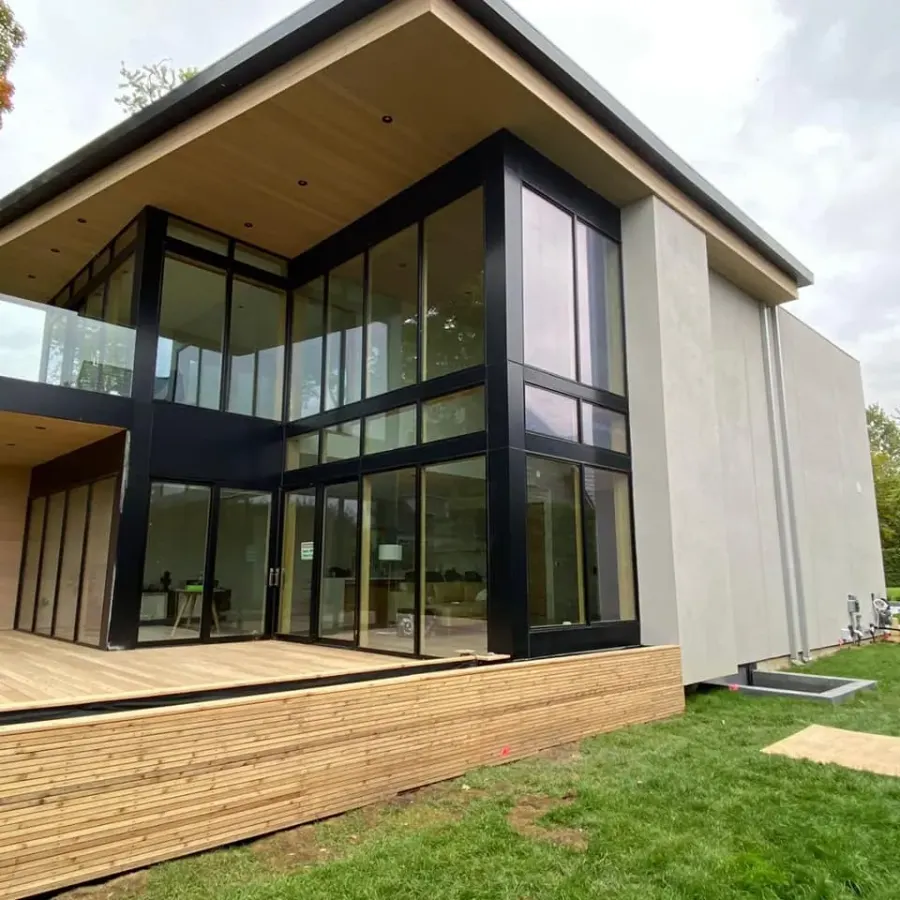

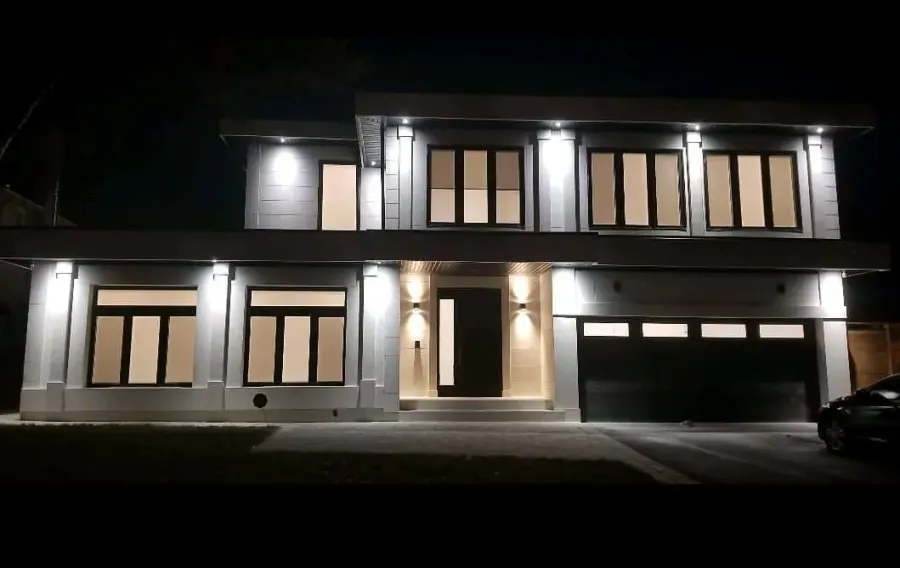
What an EIFS wall is made of
Each layer has a job. The system works only when all of them are there.
- Substrate and water barrier
Sheathing in sound condition and, in a drainage system, a fluid-applied or sheet barrier that sends any water that gets in back out at the bottom.
- Insulation board
Expanded polystyrene (EPS) fixed to the wall with adhesive or mechanical fasteners. This is the insulation value and the flat surface for everything above.
- Base coat with mesh
A polymer-modified cementitious base coat with fibreglass reinforcing mesh fully embedded. It gives the wall its strength and crack resistance.
- Primer and finish
A primer where the system calls for it, then the acrylic finish coat in the chosen texture and colour. The colour is through the coat, not on it.
- Sealants and flashings
Every window, door, penetration and transition caulked with a compatible sealant and flashed so water runs out, not in. This is the layer most failures are missing.
Which EIFS, and where it belongs
Polymer-based, the most common type on houses. Thin, flexible coatings with a high polymer content that strengthen and seal the system.
Adds a drainage plane behind the insulation. Standard for wood-frame construction and what we recommend on houses.
EIFS goes straight onto sound block, concrete or brick, which is how most commercial buildings and brick houses get it.
EIFS stops above the ground. Below grade it traps water and invites pests. We will not run it into the soil, whatever the previous installer did.
What causes most of the problems with EIFS
EIFS was designed to seal and insulate the exterior of a building. Problems occur when poorly installed or missing caulking and flashing let water leak into the space behind the system. Because the system keeps moisture out, moisture that gets in has no way to escape and sits in the wall. Many of the stucco systems we are called to repair were never caulked at all.
Lifespan depends on the contractor. Rush the job, mix in products that do not belong in the system, or skip sealing the windows and joints, and the wall will fail. Do everything properly and it lasts as long as the building. That is why we use complete systems from manufacturers such as Durabond, Sto, Dryvit, Adex and Senergy, and why we do not subcontract.
What moves the number on an EIFS job
Every job is quoted after we see the wall. These are the things that move the number.
- Area, height and access
Measured at the site visit.
- The system specified
Drainage EIFS costs a little more than a barrier system and is worth it on wood frame.
- Insulation thickness
Thicker board for more insulation value, or to bring the new wall flush with existing details.
- Openings and transitions
Each one is a flashing and sealant detail done by hand.
- Finish choice
Most textures and colours are standard. Specialty finishes cost more.
Send a photo of the wall
Lars calls back to book the free site visit, usually within a day. Then one price in writing.
Send a photo or call
Free site visit
One price in writing
What our customers say

I would HIGHLY recommend Stucco & Co. Lars immediately stood out as professional, friendly, honest, and as someone who genuinely cares for his clients. Lars went above and beyond to help out with the stucco issues I was facing. An outstanding guy and an outstanding business. Will definitely be working with him again soon!

Lincoln Homes Canada Inc. highly recommends working with this company! They are very efficient, work hard and are easy to work with. Customer service is their number one priority and they deliver what they promise.

Lars and his crew came highly recommended to us through our builder to do the exterior stucco and trim work on our custom home. From the initial consultation, through to the completion of this phase of our build, Lars was always accessible and responsive to our inquiries and needs. He helped us get the right look we were hoping for, came up with great money saving ideas and the product and workmanship was outstanding. His crew truly defines what hard work and attention to detail is all about. The work was done on time, on budget and far exceeded our expectations. I wouldn’t hesitate to hire him again or to recommend his company to anyone who wants the job done right. Note: I have not received, nor have been offered any compensation or discount for this review. I’m just really happy with the work that was done and hope that others can benefit from a similar experience with this company.

Lars and his team did a wonderful stucco job on our home. I feel like we bought a new home when I drive in after work. The team is very professional and clean. It was very easy communicating with Lars, small changes, colours, mouldings, etc... I'm very happy that we picked Stucco&Co among a few that came for an estimate. He wasn't the cheapest but I had a good feeling when I met Lars. I highly recommend their services.

Lars and his team were fantastic to work with. Lars took the time to explain the process, the application being used and all our options. The team did a wonderful job and the stucco looks great. They started the job exactly as promised and finished on time, the price was as quoted with no surprises. We would highly recommend Stucco & Co.
EIFS systems questions
What is the difference between EIFS and stucco?
Traditional stucco is a cement plaster over lath, with no insulation. EIFS adds insulation board outside the wall and uses thin, flexible polymer coatings. Both are trowelled finishes and look similar; EIFS insulates and resists cracking better. Our guide on EIFS versus traditional stucco goes deeper.
Does EIFS rot the wall behind it?
Only when water gets in and cannot get out. Proper flashing, sealing and a drainage plane prevent that. Every failed wall we open was missing one of the three.
Can EIFS be repaired?
Yes. Damaged sections are cut back to sound material and rebuilt layer by layer, then the finish is matched. See stucco repair.
Can you replace an EIFS system another company installed badly?
Yes. We remove the existing cladding, inspect and repair the wall behind it, and install a new system properly.
Is the work insured and warrantied?
Yes. Stucco & Co carries $5 million liability insurance and WSIB coverage, and every job comes with a one-year warranty on our work.