
How long does stucco last in Ontario, and what shortens it?
Done properly, a stucco or EIFS wall lasts as long as the house. Most of the walls we are called to repair are nowhere near that old. The difference is almost never the system. It is how it was installed and whether anyone looked at the joints.

The honest number
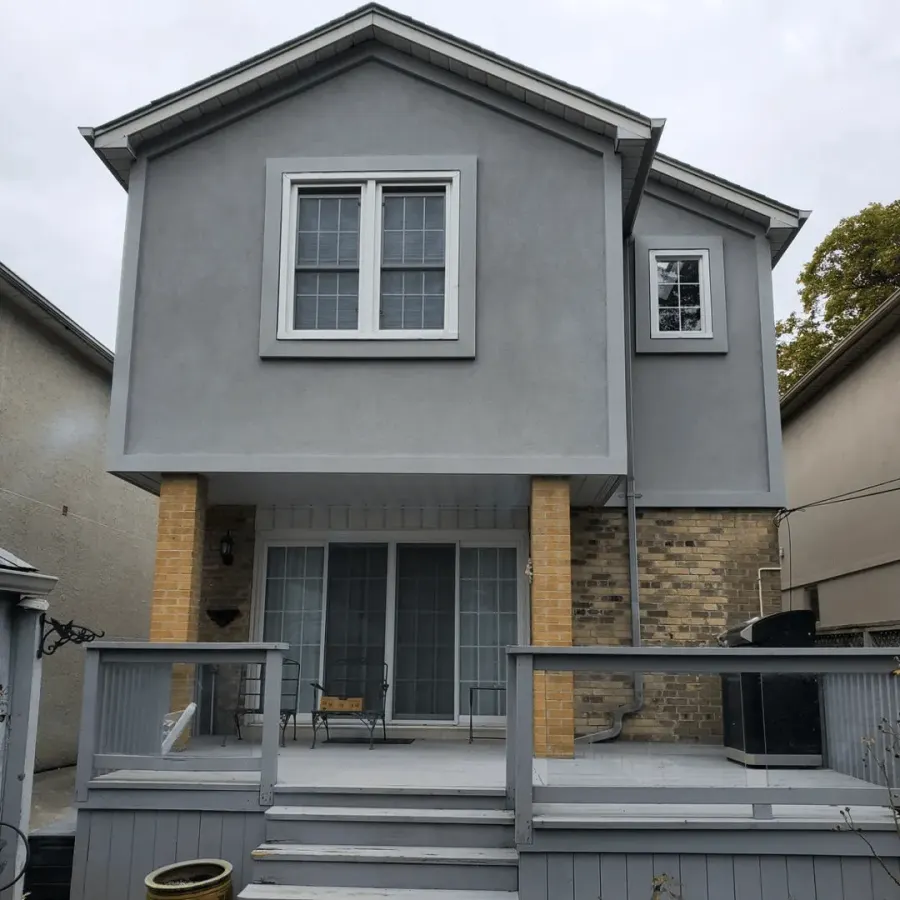
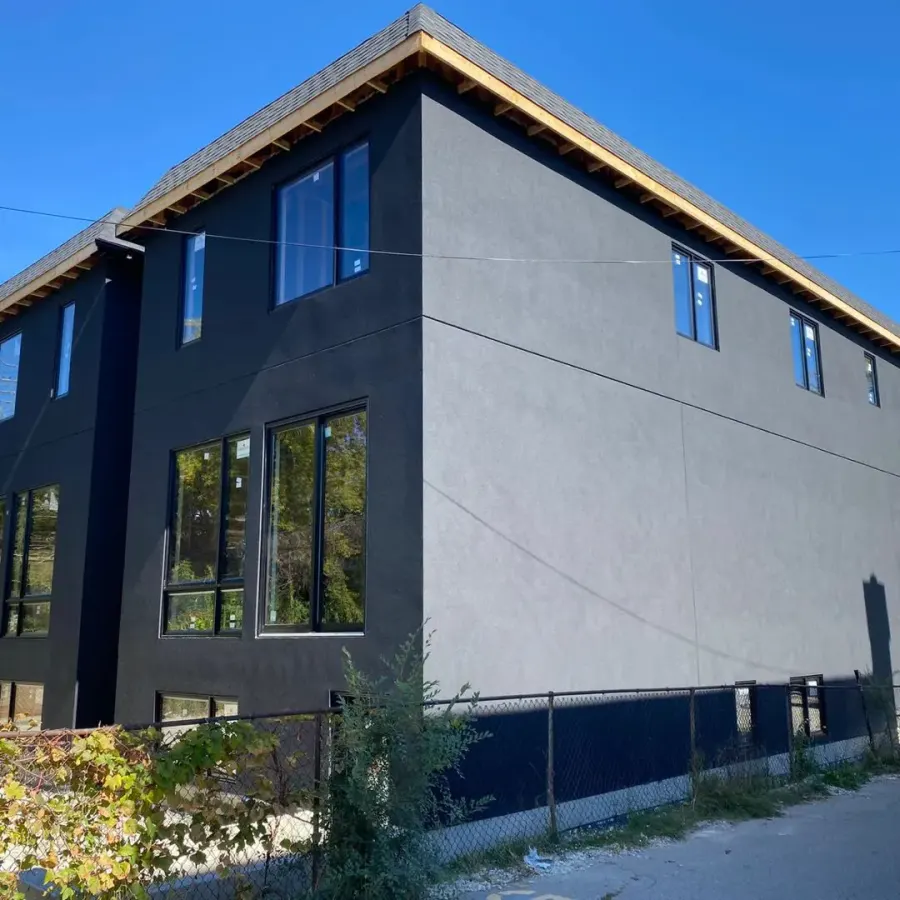
We are asked this at most site visits, and the honest answer is a range. An EIFS wall installed as the manufacturer designed it, with every window and joint sealed and the sealant renewed when it ages, has no fixed lifespan: the insulation and base coat do not wear out, and the finish keeps its colour for decades. A wall installed in a hurry, with no flashing, hardware-store caulking and the system run into the soil, can fail inside ten years.
Traditional cement stucco is similar. Well-done cement stucco on a sound wall lasts a lifetime with occasional crack repair. Badly done, it falls off in sheets.
What the Ontario climate does to a wall
Freeze-thaw
The GTA swings above and below freezing dozens of times each winter. Water that has got into a wall expands when it freezes. In cement stucco that opens cracks; in EIFS it pushes finish off base coat and base coat off board. Dry walls do not care about the cold. Wet walls are destroyed by it.
Sun
South and west elevations take the most ultraviolet light and the most heat. Finish colours fade slowly, dark colours faster, and sealants on those walls dry out and lose their stretch sooner than on the shaded sides. If you check one elevation each spring, check the sunny one.
Driven rain and snow
Wind-driven rain finds every open joint. Snow sitting on a flat sill or band melts and refreezes against the window. Houses near the lake and on open sites take the most.
Grade and splash
Stucco that touches the ground wicks moisture from the soil and is hit by splash and salt from walkways. The bottom foot of a wall ages faster than the rest, which is why the system should stop above grade and why a stone base course is more than a look.
What shortens a wall's life
- No sealant, or the wrong sealant. The single biggest cause. Many of the walls we repair were never caulked at all.
- Missing flashings. Kick-out flashings where a roof meets a wall, head flashings over windows, and flashings at decks and transitions. When they are missing, water goes behind the system.
- Stucco below grade. It wicks water up and traps it.
- Mixed products. A base coat from one system, a finish from another and whatever adhesive was on sale. The manufacturers test their products together for a reason.
- Rushed base coats. Mesh not fully embedded, thin spots, no extra mesh at corners. The wall cracks and chips at the first knock.
- Paint. Paint on an acrylic finish peels and traps moisture.
- Sprinklers and downspouts. A sprinkler soaking the same patch of wall every morning, or a downspout dumping onto it, does more damage than a year of weather.
What adds years back
- Walk the house every spring. Look at every window, especially the bottom corners, for cracked or missing sealant and for stains. Press any area that looks lifted.
- Renew sealants before they fail. A day of sealant work every several years is the cheapest maintenance a stucco house can have.
- Fix blisters at once. A blister is the visible end of a wet wall. It does not get cheaper by waiting.
- Keep water off the wall. Aim sprinklers away, extend downspouts, clear gutters, keep soil and mulch below the bottom of the system.
- Resurface instead of patching endlessly. When an elevation has many small problems, a new mesh-reinforced layer resets the clock for the whole wall.
Signs a wall is nearing the end of a phase
Chalky finish that comes off on your hand, widespread hairline cracking, sealant pulling away from frames, stains under windows, and hollow-sounding areas. None of these means the wall has failed. They mean it is time for sealant, a recoat or resurfacing, in roughly that order of cost, before the water gets in.
What we do about it
We install complete systems from recognised manufacturers, seal every joint, keep the system above grade, and tell you what to watch over the years. For an existing wall, a free site visit tells you where it is in its life and what, if anything, it needs this year.
Three steps to a written quote
Send a photo or call
Use the form or call (416) 676-6908. A photo of the wall helps us come prepared.
Free site visit
We measure, check what is under the finish and talk through the options.
One price in writing
A written quote for the work agreed, then a start date that holds.
Quick answers
How often should I have my stucco inspected?
Walk it yourself every spring. Have it looked at professionally when you see cracked sealant, stains or lifted areas, or every several years on an older wall.
Does dark stucco last less long?
The system lasts the same. Dark finishes fade sooner and the sealants on hot walls age faster, so they need attention a little earlier.
My EIFS is 25 years old with no problems. Should I do anything?
Renew the sealants if they have never been done. That is the one job that keeps a good wall good.
Is the work insured and warrantied?
Yes. Stucco & Co carries $5 million liability insurance and WSIB coverage, and every job comes with a one-year warranty on our work.
Tell us about your walls
A free site visit anywhere in the GTA, then a written quote.