
Stucco resurfacing: a new wall over the old one
Resurfacing puts a new layer of stucco over the existing surface: a fresh base coat with mesh and a new finish, over the whole wall. It is the right answer when a wall has many small problems, a dated finish, or a texture you want to change, and it makes the wall more resistant to cracks, blisters and holes than it was.
Owners of stucco or EIFS walls with widespread cracking, a worn finish, or a look they want to change. What you get
The whole elevation re-skinned with mesh and a new finish, in the texture and colour you choose. Where
Toronto, Mississauga, Vaughan, Oakville and the rest of the GTA. 4.933 Google reviews
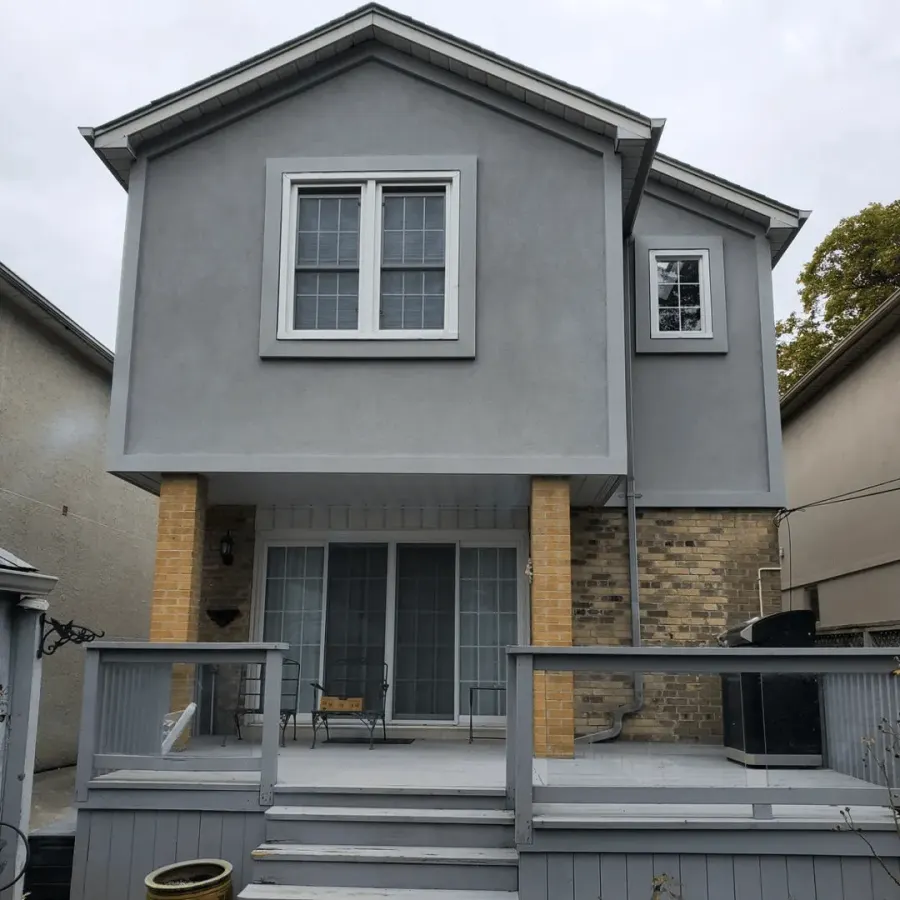
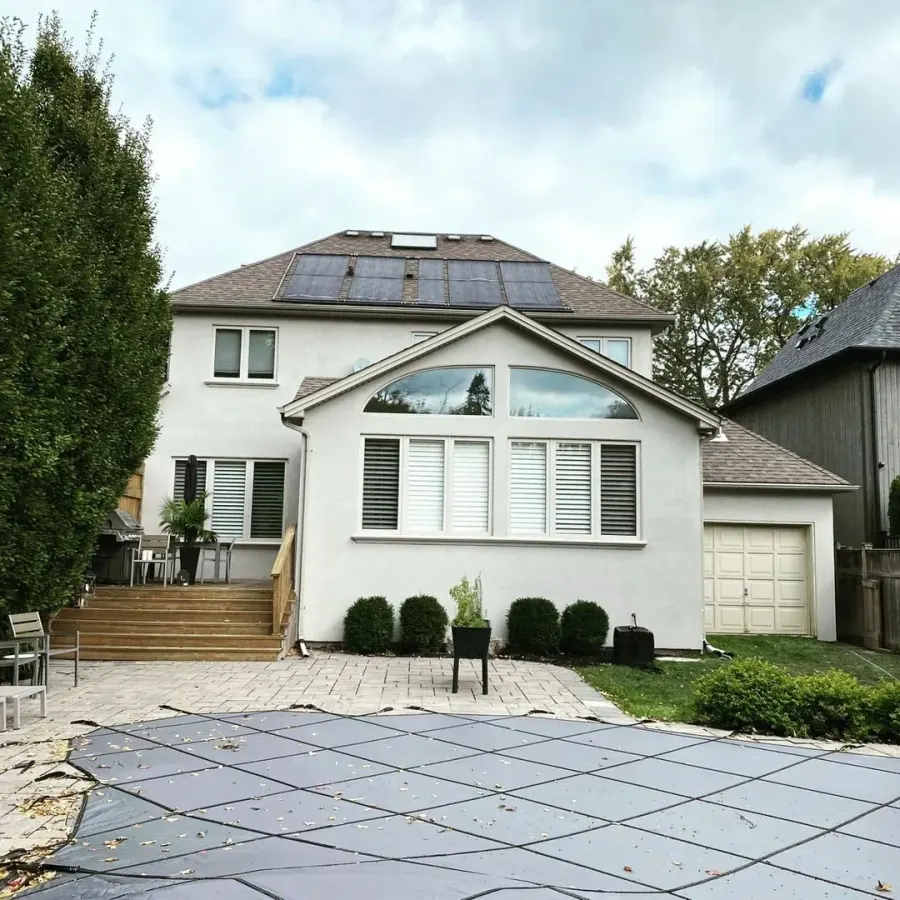
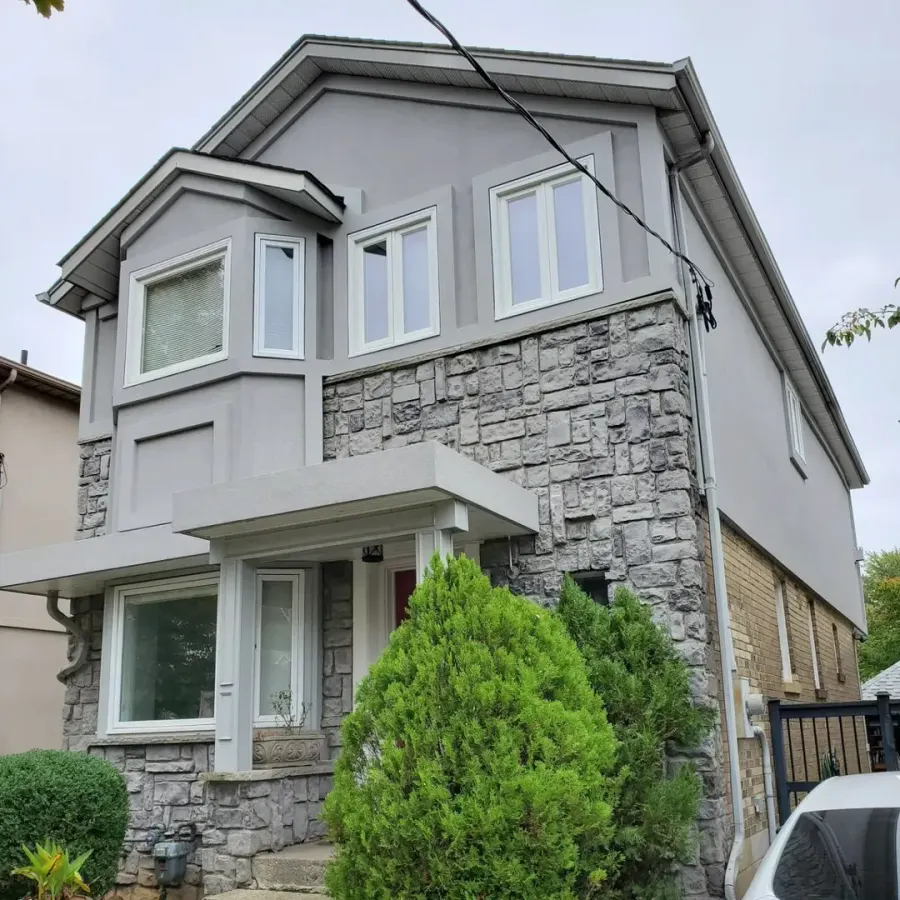
What resurfacing includes
It is more than a skim coat. The mesh is what makes the new surface last.
- Inspect and repair
Blisters, hollow areas and open cracks are repaired first. Resurfacing over a wet or loose wall would fail with it.
- Seal the joints
Windows, doors and junctions recaulked, since the old sealant is usually the reason the wall cracked.
- Prepare the surface
Cleaned, loose material removed, and primed where the system requires.
- New base coat with mesh
A full base coat with fibreglass mesh embedded across the whole wall. This bridges old cracks and stops new ones.
- New finish
Trowelled on in the texture and colour you chose. The wall reads as new because, from the mesh out, it is.
When resurfacing is the right call
Repairing each one leaves a wall of patches. One new skin costs less and looks like one wall.
Chalky, faded or stained finish on a sound base. Resurfacing restores it for years more.
A different texture or colour, or an old pebble finish brought up to date with a smooth modern one.
If the base coat is loose or the wall behind is wet, resurfacing hides a problem for a season. Then we talk about restoration or replacement.
Three reasons we hear most
A new design and a fresh look. Many resurfacing jobs start as a wish to modernise a house, and the repair work comes along with it.
Several deteriorating areas at once. When cracks, blisters and stains are spread over an elevation, one new layer addresses all of them and the wall ends up stronger than it was.
More years from the exterior. Resurfacing is a long-term solution and a sound investment: the new mesh and finish make the wall more resistant to cracks, blisters and holes, which saves money over the years that follow.
What moves the number on a resurfacing job
Every job is quoted after we see the wall. These are the things that move the number.
- Area and access
Measured at the visit, with scaffold or lift needs noted.
- Repairs first
The number and size of blisters and cracks that have to be fixed before the new layer goes on.
- Texture change
Going from a heavy texture to a smooth one takes more levelling than like for like.
- Details
Sills, bands and mouldings that have to be worked around or renewed.
- Joints
How many windows and transitions need recaulking.
Send a photo of the wall
Lars calls back to book the free site visit, usually within a day. Then one price in writing.
Send a photo or call
Free site visit
One price in writing
What our customers say

I would HIGHLY recommend Stucco & Co. Lars immediately stood out as professional, friendly, honest, and as someone who genuinely cares for his clients. Lars went above and beyond to help out with the stucco issues I was facing. An outstanding guy and an outstanding business. Will definitely be working with him again soon!

Lincoln Homes Canada Inc. highly recommends working with this company! They are very efficient, work hard and are easy to work with. Customer service is their number one priority and they deliver what they promise.

Lars and his crew came highly recommended to us through our builder to do the exterior stucco and trim work on our custom home. From the initial consultation, through to the completion of this phase of our build, Lars was always accessible and responsive to our inquiries and needs. He helped us get the right look we were hoping for, came up with great money saving ideas and the product and workmanship was outstanding. His crew truly defines what hard work and attention to detail is all about. The work was done on time, on budget and far exceeded our expectations. I wouldn’t hesitate to hire him again or to recommend his company to anyone who wants the job done right. Note: I have not received, nor have been offered any compensation or discount for this review. I’m just really happy with the work that was done and hope that others can benefit from a similar experience with this company.

Lars and his team did a wonderful stucco job on our home. I feel like we bought a new home when I drive in after work. The team is very professional and clean. It was very easy communicating with Lars, small changes, colours, mouldings, etc... I'm very happy that we picked Stucco&Co among a few that came for an estimate. He wasn't the cheapest but I had a good feeling when I met Lars. I highly recommend their services.

Lars and his team were fantastic to work with. Lars took the time to explain the process, the application being used and all our options. The team did a wonderful job and the stucco looks great. They started the job exactly as promised and finished on time, the price was as quoted with no surprises. We would highly recommend Stucco & Co.
Stucco resurfacing questions
Can you resurface just one wall?
Yes. Most jobs are one or two elevations. We match the finish to the walls we are not doing, or you can take the chance to change the whole house.
How long does resurfacing last?
With the joints sealed and the base sound, decades. The new mesh layer is the same reinforcement a new wall gets.
Can you change the texture?
Yes. That is one of the main reasons people resurface. We bring samples to the visit.
Is resurfacing cheaper than a new exterior?
Yes, by a lot, when the existing base and wall are sound. If they are not, we tell you at the visit and quote the right job instead.
Is the work insured and warrantied?
Yes. Stucco & Co carries $5 million liability insurance and WSIB coverage, and every job comes with a one-year warranty on our work.