
Resurfacing versus repair versus replacing the system
Every damaged stucco wall gets one of three jobs. Picking the right one is most of the decision, and picking the cheapest one when the wall needs the next one up is how owners pay twice.
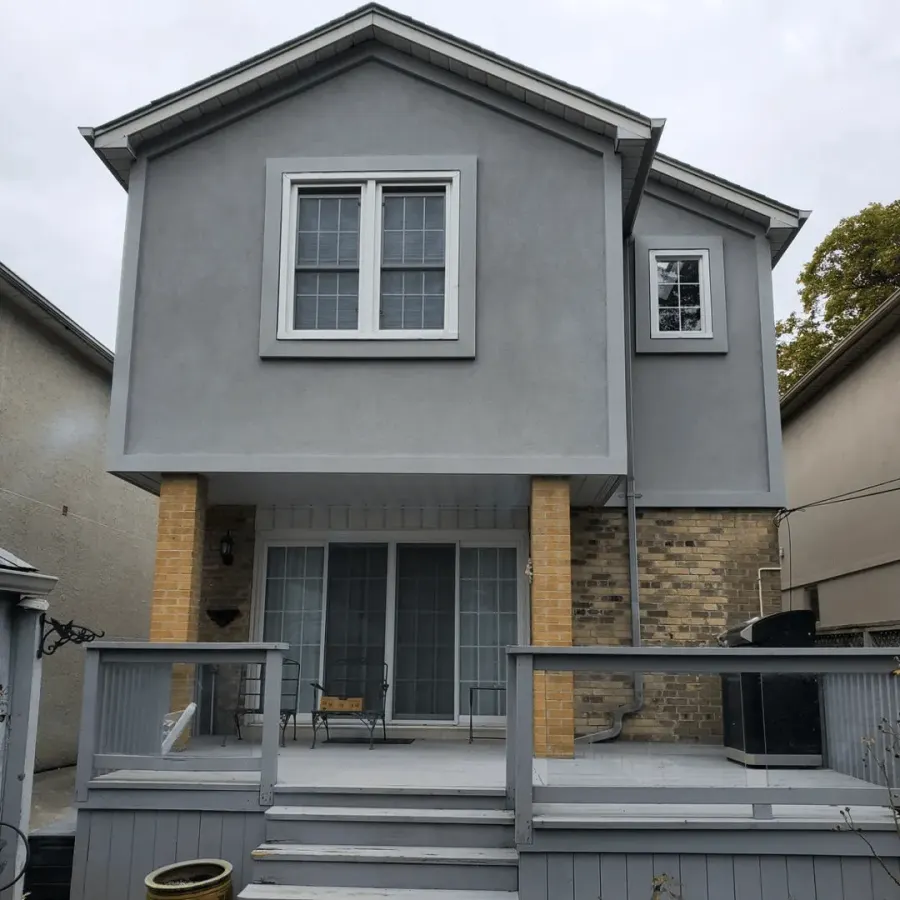
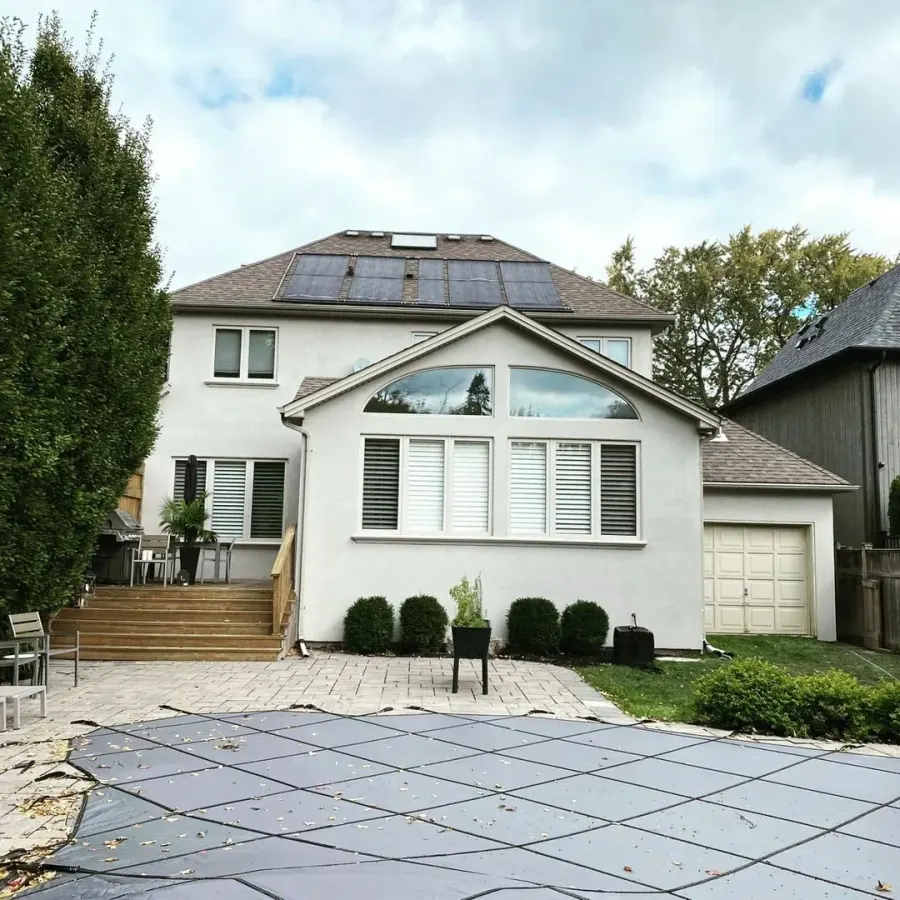

The three jobs
Repair
Fixing a specific damaged area: a crack, a blister, a hole, a section under a leaking window. The area is cut back to sound material, the cause is fixed, the layers are rebuilt with mesh, the joints nearby are sealed and the finish is matched. The rest of the wall is untouched. A repair is the right job when the wall is sound and the damage is local.
Resurfacing
A new skin over the whole elevation: repairs first, then a new base coat with fibreglass mesh across the entire wall, then a new finish in the texture and colour you choose. The existing insulation and base coat stay as the substrate. Resurfacing is the right job when one wall has many small problems, a finish at the end of its life, or a texture you want to change, and the wall behind is dry and attached.
Replacement
The existing system comes off down to the sheathing. The wall behind is inspected, dried and repaired, including sheathing or framing if needed. A new system goes on from the weather barrier up, with flashings and sealants done properly this time. Replacement is the right job when the insulation board is loose over large areas, when water has got into the structure in more than a few places, or when the original installation was so poor that patching it is throwing money at a wall that will keep failing.
How to tell which one you need
At a site visit we tap, press and look, and sometimes open a small area. You can do the first three yourself.
- Count the problems. One blister and a crack: repair. Cracks across the wall and stains under several windows: resurfacing. Soft areas on more than one elevation and water inside the house: likely replacement.
- Tap the wall. A sound EIFS wall sounds uniformly hollow but firm. Areas where the base coat has separated from the board sound different and give under a push. A few such areas are repaired; a wall full of them is resurfaced or replaced depending on whether the board is still attached.
- Check the base. If the stucco runs into the soil and the bottom foot is soft, water has been wicking up for years. The extent decides between a long repair and replacement.
- Look at the age and the finish. A chalky, faded finish on a sound wall wants resurfacing or a recoat, not repairs. Repairs on a tired finish never blend.
- Ask what you want the house to look like. If the answer is different from what it looks like now, resurfacing gets you there and solves the problems on the way.
Where owners get it wrong
Repairing a wall that needs resurfacing
Three blisters repaired this year, two cracks next year, a stain the year after. Each repair is cheap, each one is visible, and after five years the wall is a patchwork that still has the problems it started with. One resurfacing job would have cost less in total and given you one wall.
Resurfacing a wall that needs replacing
A new skin over wet sheathing or loose board looks perfect for a season. Then the blisters come back through the new finish, and now the new layer has to come off as well. If the wall behind is wet, the system has to come off to dry and repair it. There is no shortcut.
Replacing a wall that only needs resurfacing
Less common, but it happens when a contractor only sells one job. If the board is attached and the wall behind is dry, you do not need to pay to take it off.
What about a recoat?
A recoat is a new finish coat only, on a sound wall with its existing texture, usually to change the colour. It sits below resurfacing in cost and scope. If the wall is sound and you want a new colour, a recoat. If it has cracks or you want a new texture, resurfacing.
Cost, in order
We do not publish prices, because every wall is different, but the order is always the same: repair, recoat, resurfacing, replacement. The service pages explain what moves the number within each. A free site visit tells you which job your wall needs and why, in writing, before you commit to any of them.
A note on partial jobs
Most of these jobs can be done one elevation at a time. The front this year and the rest next is a normal plan for a house, and worst elevation first is how most managed buildings are done. What we will not do is resurface over a problem we have found, because it comes back and it comes back as our problem.
Three steps to a written quote
Send a photo or call
Use the form or call (416) 676-6908. A photo of the wall helps us come prepared.
Free site visit
We measure, check what is under the finish and talk through the options.
One price in writing
A written quote for the work agreed, then a start date that holds.
Quick answers
Can you resurface just the front of the house?
Yes. The finish is matched to the sides, or you take the chance to change the whole house over time.
If the wall needs replacing, how long does the house have no exterior?
Days, not weeks. Elevations are stripped and rebuilt in sequence and the wall is never left open to weather overnight.
Will insurance cover any of this?
Sometimes, for sudden damage such as impact or a storm. Wear and long-term leaks are usually not covered. Ask your insurer; we provide the written assessment.
Is the work insured and warrantied?
Yes. Stucco & Co carries $5 million liability insurance and WSIB coverage, and every job comes with a one-year warranty on our work.
Tell us about your walls
A free site visit anywhere in the GTA, then a written quote.